Two banks test quantum-resistant wallets on NEAR testnet
- Bison Bank
- DK Bank
- Safeheron
- post-quantum wallets
NEAR testnet
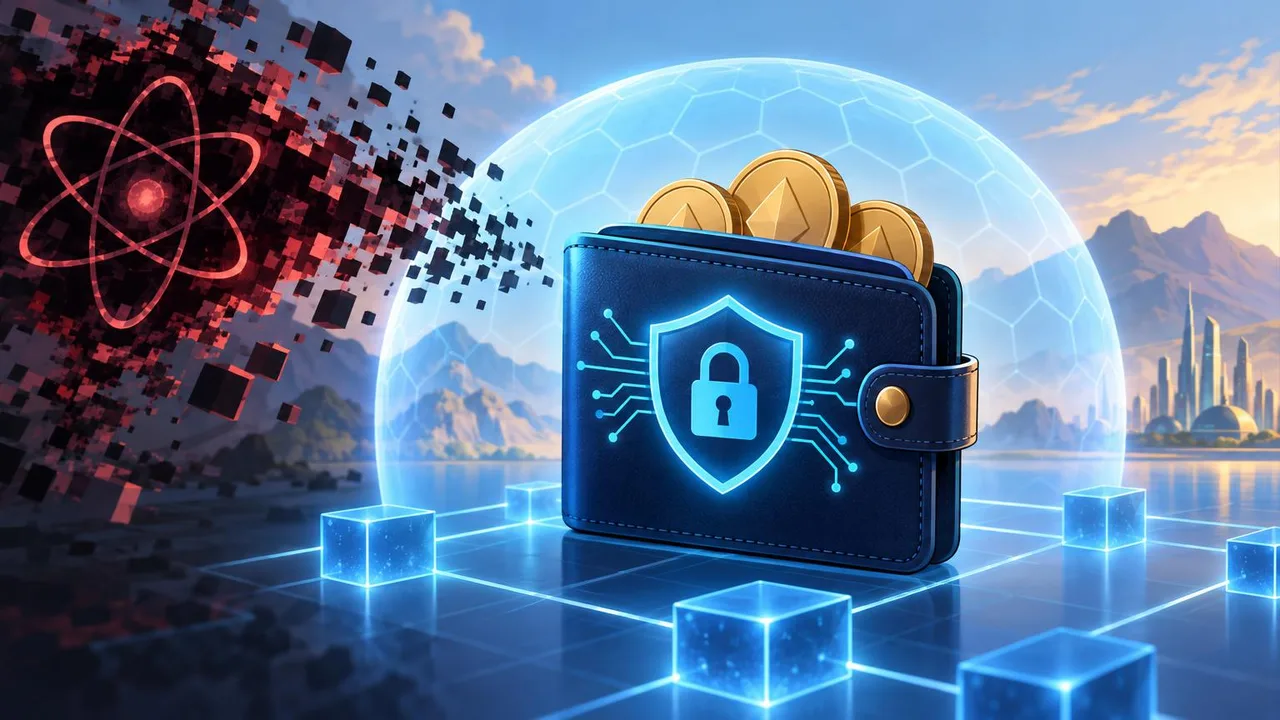
Bison Bank and DK Bank take part in a pilot organized by RFI and Safeheron
The trial uses ML-DSA-65 signatures and a 2-of-2 signing design
Three regulators observe; the test does not involve NEAR’s live network
Responsible Fintech Institute (RFI) and technology partner Safeheron organized a pilot announced on August 24, 2026, to test quantum-resistant cryptocurrency wallets with Bison Bank and DK Bank. The trial uses a NEAR testnet, a separate environment for testing blockchain functions, and does not establish that the design is ready for commercial use or that the live NEAR network is quantum-proof, CoinGabbar reported.
The two banks are to create wallets and send transfers through a shared test application. Abu Dhabi Global Market, Bhutan’s Gelephu Financial Services Office and Malta Financial Services Authority are observing. Their roles differ from the banks’: the regulators are not all testing or operating wallets.
The wallets use ML-DSA-65, a digital-signature algorithm standardized as part of NIST FIPS 204. A digital signature lets a network check that a transaction was authorized by the holder of the corresponding key. The pilot also uses non-custodial 2-of-2 multiparty computation (MPC), a method that splits signing authority between two key shares so both must cooperate to produce a signature.
The signature size creates a practical trade-off. CoinGabbar reports that an ML-DSA-65 signature is 3,309 bytes, compared with about 64 bytes for a typical secp256k1 elliptic-curve signature. Larger signatures increase blockchain storage and bandwidth demands and can raise verification costs.
The pilot’s technical core is a threshold-signing protocol developed by Safeheron to combine MPC with ML-DSA-65. Organizers plan to publish a white paper on the research, protocol design and test findings; Safeheron has said it intends to open-source the underlying technology. Neither action has yet been completed.
The test does not show that current quantum computers can break mainstream wallet signatures. CoinGabbar says no publicly demonstrated quantum computer is known to do so. The algorithm addresses the mathematical link between a key and a signature, but cannot by itself prevent risks such as compromised devices, phishing, weak custody controls or faulty implementation.
The white paper and further testing will be important to assess governance, performance and resilience at larger scale. The pilot does not change what everyday wallet users need to do now: secure backups, strong passwords and careful transaction approvals remain important.
Key terms explained
- threshold-signing protocol
A threshold-signing protocol lets multiple participants work together to produce a digital signature.
Think of it this way. It is like requiring several people to agree before a document is stamped.
- digital signature
A digital signature is computer data created by rules that allow the signer's identity and the integrity of the signed data to be checked.
Think of it this way. It is like a seal that can be checked to see who applied it and whether a document changed.
Our priority is to report the news promptly and faithfully.
We use AI to summarize the key facts in our sources. Our editors are responsible for final review and publication.
We leave it to readers to interpret the facts and draw their own conclusions.