Peter Schiff warns crypto downturn could hit US harder than 2008 crisis
- Peter Schiff
- Bitcoin
- Federal Reserve
- spot ETFs
- crypto downturn
Bitcoin fell to a two-year low of $55,106
US spot Bitcoin ETFs saw roughly $3.47 billion in November outflows
Schiff’s forecast depends on deflation continuing
Economist Peter Schiff warned that a crypto-market downturn could make the United States the country hardest hit financially. In a report published November 22, 2026, COINOTAG said Schiff linked that risk to Bitcoin’s weekend fall to a two-year low.
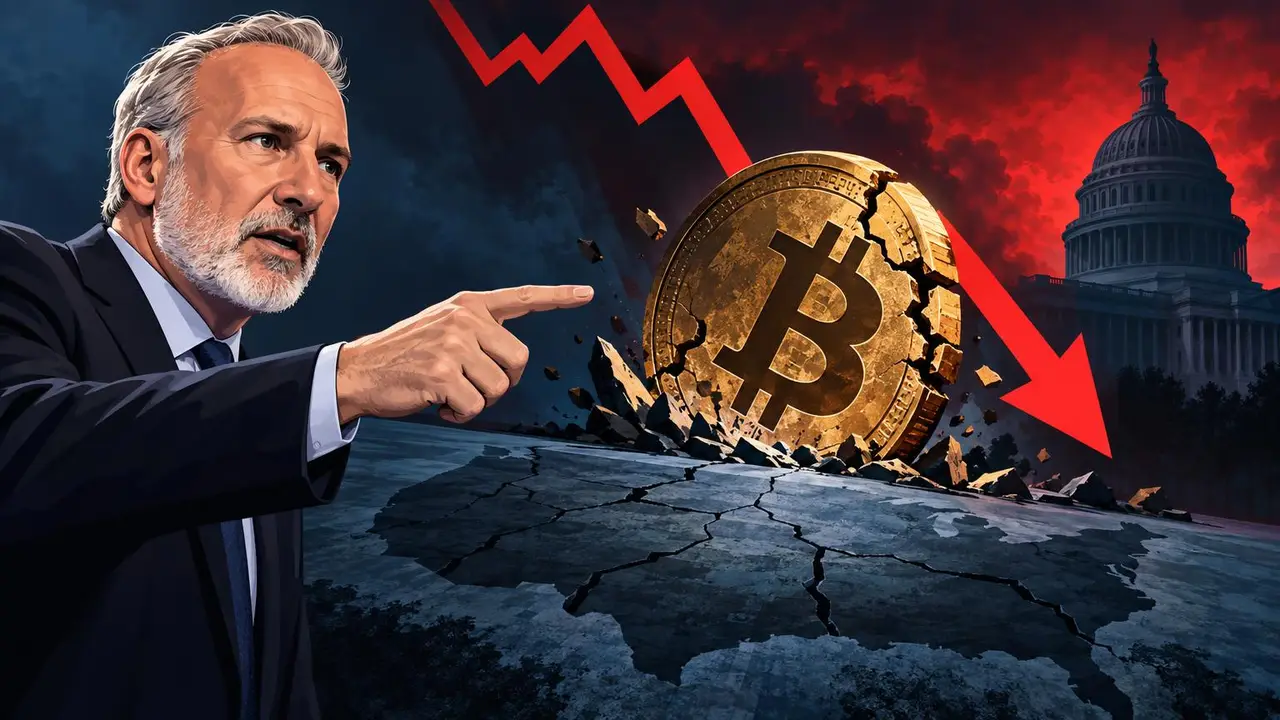
Bitcoin dropped to $55,106, more than 56% below its $126,000 record set in October 2025, according to the article. The price had recovered to about $60,270 by the time of its reporting, but remained far below the peak.
US spot Bitcoin exchange-traded funds (ETFs), which hold Bitcoin directly and trade on stock exchanges, recorded roughly $3.47 billion in net outflows in November 2026, COINOTAG reported. Schiff argued that US policy to attract digital-asset businesses and approval of these funds had made American households and institutions more exposed to a downturn.
Schiff pointed to weak gold prices and a US housing-market index reading of 25, its lowest since 2012, as signs of broader asset deflation. He said that if deflation continues, the resulting shock could exceed the 2008 financial crisis and force the Federal Reserve back into monetary easing.
The article also cited a Federal Reserve survey in which 9% of US adults said they had bought or held cryptocurrencies for investment. The figure covered Bitcoin, Ethereum and other coins, but the survey did not break down respondents’ holdings or losses.
COINOTAG reported that the Nasdaq fell 5.28% on November 20, 2026, erasing its gains for the year. Schiff’s warning remains a conditional forecast; the article does not establish that a crisis on the scale he described or renewed Federal Reserve easing has occurred.
Our priority is to report the news promptly and faithfully.
We use AI to summarize the key facts in our sources. Our editors are responsible for final review and publication.
We leave it to readers to interpret the facts and draw their own conclusions.