Wellington-Altus analyst says extreme stock-market fear could precede rally
- Wellington-Altus
- James E. Thorne
- S&P 500
- extreme fear
- buying opportunity
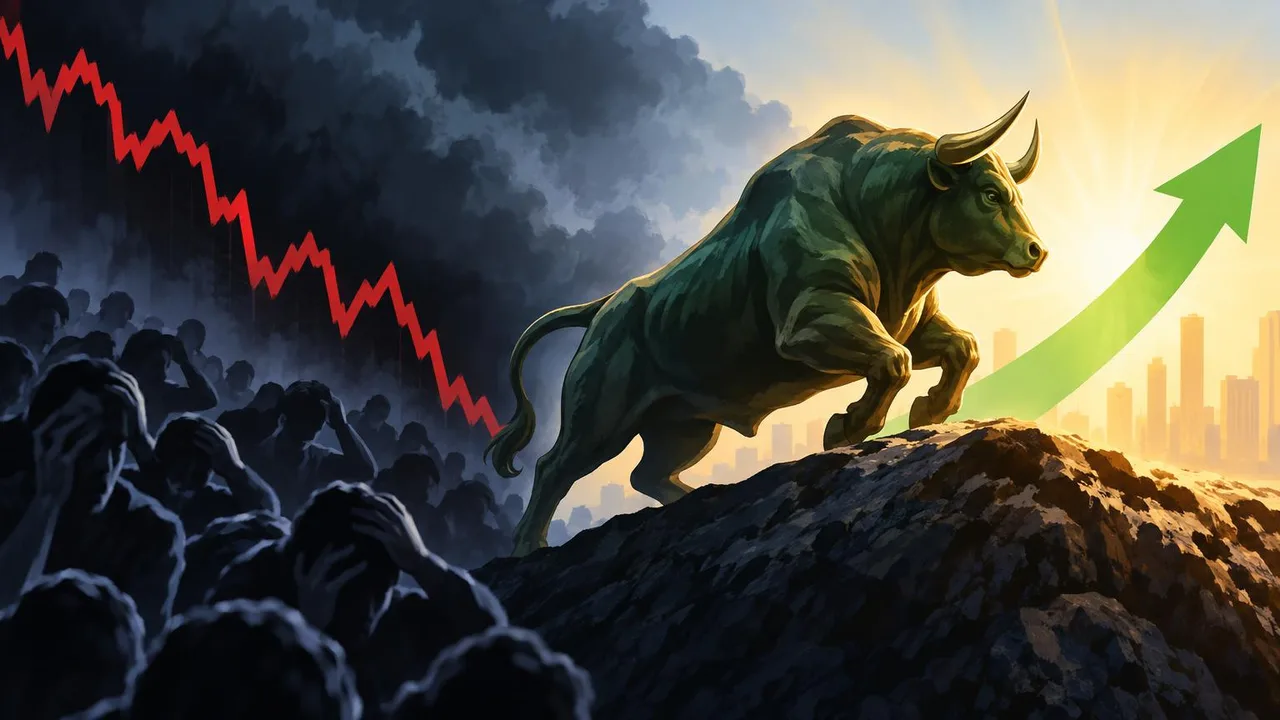
James E. Thorne calls current conditions a buying opportunity
S&P 500 is 11.6% below its October peak, he says
His market targets and policy outlook remain forecasts
Wellington-Altus strategy analyst James E. Thorne said in a note that extreme fear in U.S. stocks could set the stage for the next rally, describing current conditions as a buying opportunity. The Lookonchain report, published November 22, 2026, said Thorne argued the market was not facing a recession or financial crisis.
Thorne said the S&P 500 had fallen for seven consecutive trading days and stood 11.6% below its October peak. Its Friday close was 4.1 standard deviations below its 50-day moving average, a measure of how far the index had moved from its recent average; he described it as the most severe oversold reading since August 2015. The article did not specify the date of that Friday close.
He identified 6,900 as a key Fibonacci support level, a price area derived from a technical analysis method. The index closed at 6,910 that week, near the level he cited.
Thorne said historical sharp V-shaped rebounds had produced gains of up to 38% in the following 12 months. He said the S&P 500 could still reach 9,500 points, but presented that as his outlook rather than a confirmed outcome.
For 2027, Thorne projected S&P 500 earnings per share of $450. He said that figure would imply an index level of roughly 10,000 points at a price-to-earnings ratio of 22, which compares the index’s level with company earnings.
Thorne also forecast that the 10-year U.S. Treasury yield would fall to 4% as the energy crisis faded and that the Federal Reserve would move to accommodative policy, meaning policy aimed at supporting economic activity. Citing sell-offs without recessions in 1998, 2019 and 2025, he said the S&P 500 had gained a median 33.7% in the 12 months after such a policy shift.
He argued that the energy shock was ending and that productivity and earnings remained strong. He also described artificial intelligence as a long-term structural investment, comparing its development with the railroad era rather than a cycle limited to three years.
Our priority is to report the news promptly and faithfully.
We use AI to write our articles. People oversee publication and review and correct articles when needed.
We leave it to readers to interpret the facts and draw their own conclusions.