





Headline 1 of 5
Latest news
 SecuritybaserCMS fixes administrative API authorization flaw in version 5.3.0A baserCMS security advisory reports an authorization bypass in the administrative API affecting versions through 5.2.3. The advisory attributes the flaw to session-authentication fallback, which fails to keep the API’s authorization controls properly enforced. The Composer package baserproject/baser-core is listed as fixed in 5.3.0, and administrators running affected versions should upgrade.
 SecurityAether AMF flaw could disrupt mobility management for all subscribersAether Project maintainers warned that a flaw in the Go package github.com/omec-project/amf could terminate the AMF and disrupt subscriber mobility management. The advisory says missing length validation can cause an unrecovered panic, and identifies versions before 1.7.1-0.20260725031321-d28042aaaea0 as affected. The disruption could affect mobility management for every subscriber; administrators should upgrade to the patched version or later, and the issue is confirmed in v3.1.5.
 Securitybep/imagemeta fixes PNG memory-exhaustion flaw in version 0.17.3The bep/imagemeta maintainers fixed a PNG-decoding memory-allocation vulnerability in version 0.17.3. The advisory says untrusted PNGs containing compressed zTXt metadata labeled Raw profile type iptc can cause memory exhaustion in applications using earlier versions. Applications using versions before 0.17.3 should upgrade or limit PNG input and, when IPTC metadata is unnecessary, omit it from the decoding sources.
 SecurityALTCHA Go 2.0.0 flaw can disrupt signature verification before authenticationALTCHA maintainers warned that a flaw in the Go library can cause a denial of service in version 2.0.0. The advisory says parseServerSignature can panic on malformed verification data before a signature check. Administrators should upgrade to 2.1.0 or use temporary safeguards.
 SecurityEtherpad advisory warns of unauthenticated file exposure; version 3.3.3 fixes flawA security advisory reports an unauthenticated file-reading flaw in Etherpad, listing the affected range as = 1.8.14, < 3.3.3. The advisory says Etherpad’s static-file handler runs before authentication and authorization checks, exposing files readable by the Etherpad process. The advisory lists 3.3.3 as patched and recommends upgrading to that version or later and reviewing installations for possible exposure.
 SecurityOctober patches Media Library flaw that bypassed upload file checksOctober patched a vulnerability in its Media Library crop handler that bypassed the upload extension allowlist. The advisory says the flaw affected versions up to 3.7.13 and versions 4.0.0 through 4.3.1; fixes are available in 3.7.18 and 4.3.3. The issue required authenticated backend access with the media.library.create permission and could enable stored cross-site scripting; remote code execution was a risk only on non-default deployments that execute PHP in the media folder.
 SecurityOmniFaces advisory urges upgrade to patched 5.4.3GitHub published an advisory for an OmniFaces issue affecting versions 5.2.0 through 5.4.2. The issue may expose messages from session-, view- or user-scoped server-sent event channels to unauthorized parties, depending on what an application sends through them. The advisory lists 5.4.3 as patched and recommends upgrading to that version.
 SecurityDoorkeeper flaw could let public clients revoke tokens without authorizationA security advisory published on November 19, 2026, reported an authorization flaw in Doorkeeper’s OAuth token revocation process for public clients, affecting versions before 5.9.1. The flaw could allow tokens to be revoked without proper authorization when public, or non-confidential, clients are used. Doorkeeper fixed the issue in version 5.9.1, and administrators should update to that version.
 SecurityHtmlSanitizer fixes CSS-removal flaw that can tie up all application workersA security advisory published by GitHub reports a denial-of-service vulnerability in HtmlSanitizer involving CSS removal. The advisory says an unauthenticated request can occupy a synchronous application worker for seconds, while concurrent requests can increase CPU use and keep all workers busy. Affected releases are earlier than 9.0.967 and 9.1.878-beta up to, but not including, 9.1.968-beta; administrators can upgrade to patched versions 9.0.967 or 9.1.968-beta, or use the stated workaround of disallowing the style attribute.
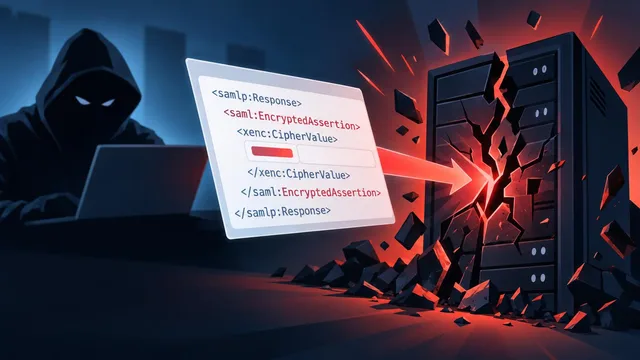 Securitygosaml2 advisory warns of unauthenticated service crashes; upgrade to 0.12.0A security advisory says gosaml2 versions through 0.11.0 can crash while parsing a SAML Response containing an encrypted assertion. The flaw is in AES-GCM decryption, where inadequate input-length protection can cause a panic before the library validates the response. Administrators using affected versions should upgrade to 0.12.0 or later to address the unauthenticated denial-of-service risk.
 SecurityiSponsorBlockTV fixes local-network SSRF flaw in version 2.11.0A security advisory reports a flaw in iSponsorBlockTV’s local smart-TV discovery that could let a local-network attacker trigger requests to internal services. The advisory says the application fetches device-capability information from addresses in SSDP responses without validating the URLs, creating a risk of blind server-side request forgery (SSRF). Versions 2.10.0 and earlier are affected; administrators should upgrade to patched version 2.11.0.
 SecurityEffect fixes template-literal denial-of-service flaw in version 3.22.1Effect advisories report that Schema.TemplateLiteral can cause denial of service when applications use it to decode untrusted input. The advisory identifies versions <= 3.22.0 as affected when templates contain multiple Schema.String spans, which can trigger excessive processing. Effect fixed the issue in effect@3.22.1; users who cannot upgrade should limit input before schema validation or reject oversized request bodies.
 SecurityAdvisory flags unverified code downloads in axon-mcpThe axon-mcp maintainers’ advisory reports an integrity-check flaw affecting versions <= 0.1.0. The package downloads and runs the rtkx binary without checking a checksum, signature or attestation. Code execution is a conditional supply-chain risk if the rtkx release pipeline or a maintainer’s release credentials are compromised; no patched version is listed.
 Securitykeystore-go flaw can bypass JKS truststore integrity checksA security advisory says keystore-go can accept JKS truststores without verifying their trailing integrity digest. The flaw affects the legacy module path through 2.1.0 and v3 releases before 3.0.0; the advisory says the digest check can fail without Decode() reporting an error. Applications loading JKS truststores with Decode() may be at risk if an attacker can write to the keystore file; fixed code is available in v3.0.0 and v4.0.0 or later on the listed paths.
 SecurityOpenID4VP maintainers disclose certificate-validation flawOpenID4VP maintainers disclosed a certificate-validation flaw in @openeudi/openid4vp that could cause forged credentials to be trusted. The advisory says versions through 0.8.0 relied on matching certificate names rather than cryptographic verification against a trust anchor. The advisory reports no workaround and recommends upgrading to patched version 0.8.1.
 SecurityGitHub advises Gortex users to upgrade to 0.55.0GitHub published a high-severity security advisory for Gortex, identifying versions earlier than 0.55.0 as affected. The advisory reports potential arbitrary file modification and code execution. Gortex users on affected versions should upgrade to 0.55.0 or later.
 SecurityTodoist MCP Server flaw exposes Todoist data to websites over optional HTTPTodoist MCP Server maintainers disclosed a browser-origin security vulnerability in the optional HTTP transport for @doist/todoist-mcp. The GitHub advisory says the flaw affects versions <= 10.3.2 and is fixed in 10.3.3. A public website could use the local server’s configured Todoist API key to make changes to Todoist data when the optional HTTP transport is running.
 SecurityTapir advisory reports remote code execution flaw in OpenAPI code generatorThe Tapir project disclosed a remote code execution vulnerability in its OpenAPI code-generation package, tapir-openapi-codegen-core. GitHub’s advisory lists versions earlier than 1.13.27 as affected and identifies version 1.13.27 as patched. The reported impact is code execution associated with code generation, but the supplied advisory does not give further impact details or mitigation guidance beyond the patched version.