OliveTin patches command injection flaw in shellAfterCompleted hook
- OliveTin
- Command injection
- Security patch
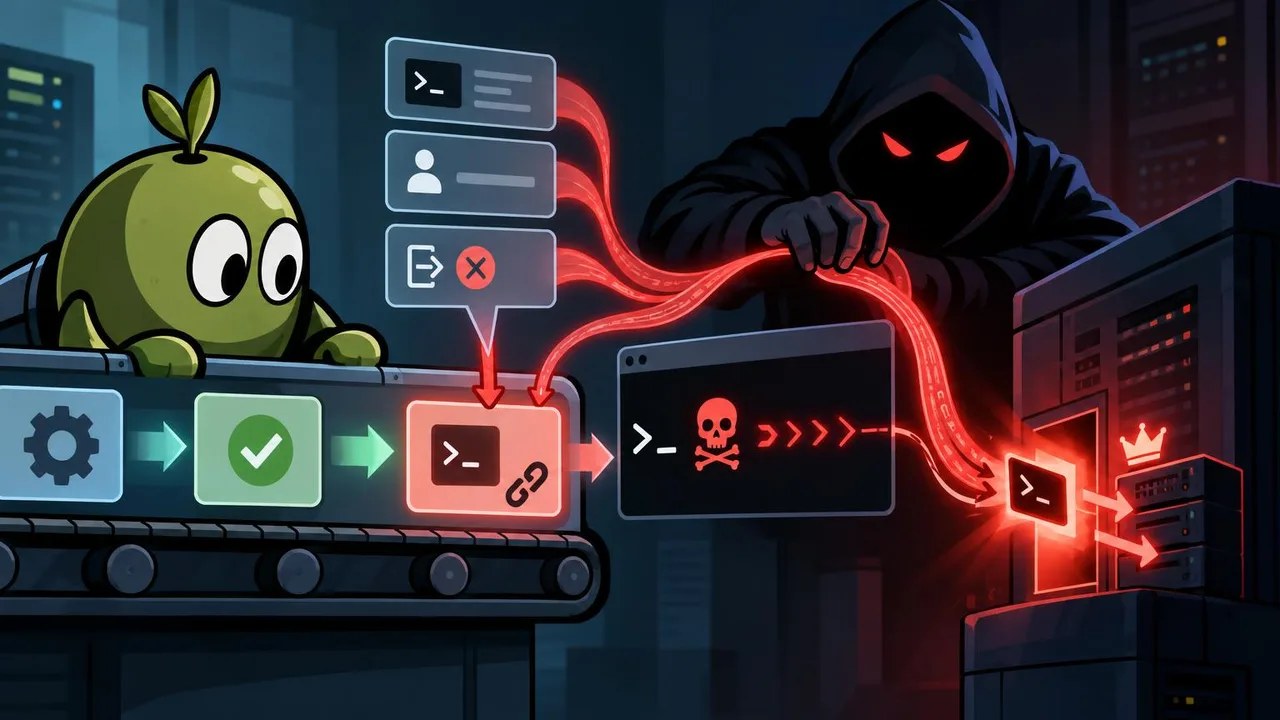
OliveTin’s shellAfterCompleted post-execution hook is vulnerable to operating-system command injection in versions before 0.0.0-20260728155752-e5d29b68da66. The flaw can let an attacker run commands remotely with the privileges of the OliveTin process.
The hook runs after a command completes and passes values such as its output, the authenticated username and the exit code into a shell command without applying the safety checks used for the main action. The vulnerability is in the post-execution step, distinct from CVE-2026-27626, which involved the primary execution step. Using safe exec mode for the main command does not prevent the issue if its output is passed to the hook.
The fixed version is 0.0.0-20260728155752-e5d29b68da66. The advisory recommends applying equivalent safety checks or escaping values before inserting them into the shell template.
Key terms explained
- command injection
Command injection is an attack where an application allows unauthorized execution of system commands by passing unsafe user input to a shell. It occurs when an application fails to properly validate input before processing it as part of a command.
Think of it this way. This is like giving a blank, signed check to a stranger who can then fill in any amount they want.